DISCLAIMER: Olivia’s name and any identifying characteristics were changed in order to protect her identity.
Whenever you meet someone new, you probably engage in the expected round of small talk. You have your set of answers prepared because the questions are always the same—your name, how you ended up here, and oh, it is so nice to meet you, too!
Whenever Olivia, a petite woman with ash-blond bob hair, finds herself in the same situation, she freezes just for a bit. As a foreigner living in Denmark, speaking English and having a non-Scandinavian surname, she hears the obligatory:
“So, where are you from?”
Oh. Not this again. Such a boring question for her, but she has her own carefully crafted response prepared.
“Well, I’m stateless.”
There is a glitch she can see in the eyes watching her, now taken aback in surprise. Suddenly, the conversation falls off the track. Olivia suppresses the urge to smile, amused by catching someone off guard during the tedious niceties as this.
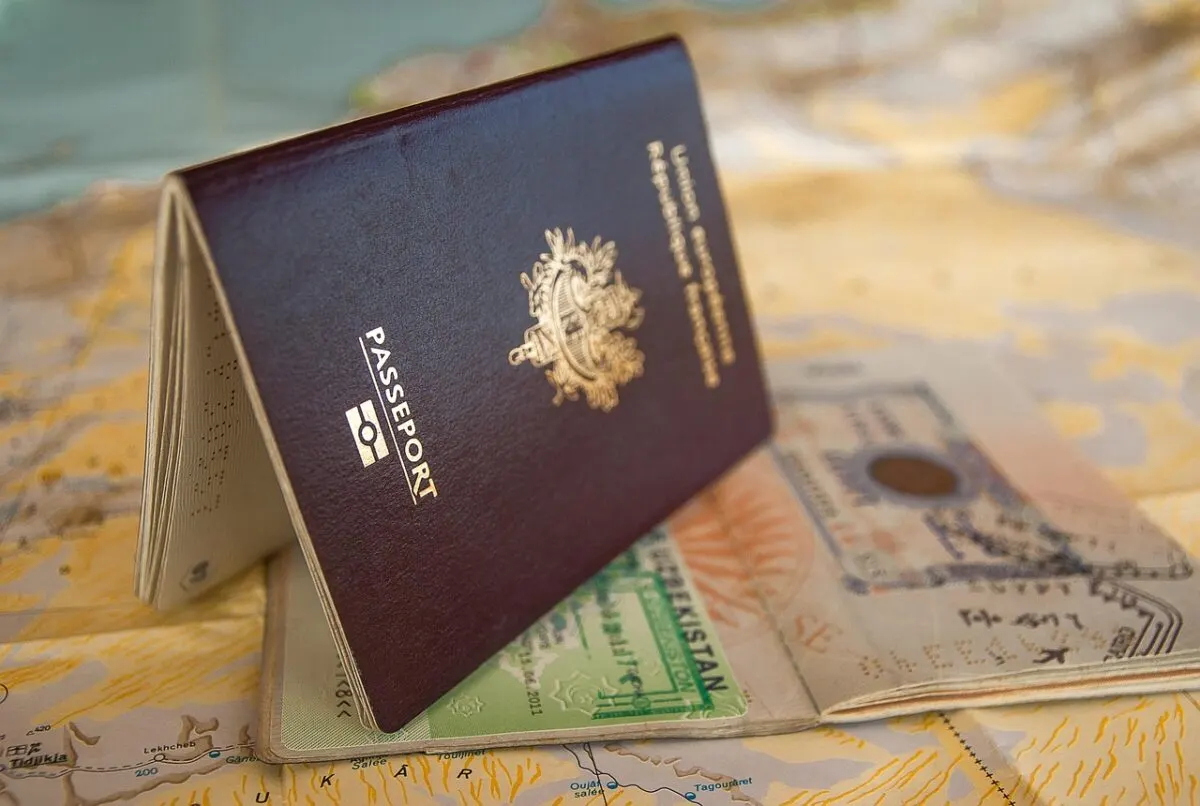
Denmark is home to over 8,000 stateless people, most of whom migrated there. According to the United Nations definition, a stateless person is an individual who is not considered a national by any state. Yet, for Olivia, the issue is far more complicated. As a transgender woman whose identity is not recognised by her country of birth, Russia, she finds herself in grey areas of legislation. She does not hold a passport that would reflect her identity as a woman and her chosen name. Without that passport, she cannot vote, study or travel. Stateless persons become invisible to the system – how should it deal with her if she cannot prove herself with the right documentation?
Olivia has repeatedly asked similar questions to lawyers after she moved to Denmark. “Wow, I’ve never had a case like this,” is the usual response that has left her as clueless as before, doubting that things could change for the better.
But there were times when Olivia had a simple answer to the where-are-you-from question.
She spent the first twenty-two years of her life in a city with a half-million population in western Russia. Is she supposed to call this place her hometown and Russia her home country? Such a loaded term, home. In her mind, the city is greyness, emptiness and steel.
The last day she spent in Russia is only a blur now. She remembers sitting in a cab, while the taxi driver is speeding through the city streets to reach the Moscow Airport. A one-way ticket to Denmark, a job contract, one large and one small backpack – that is all she is carrying with her. She has not been in contact with her family anyway, but she knows they would not support her leaving. Instead of waving her hand goodbye to someone, she hurts her hand on the taxi’s door when leaving the car, pulsing pain in her palm. She is not afraid of the upcoming travel. Olivia has been planning to leave for a very long time. Ever since she was a teenager, with access to the internet, she has been wondering about what the real image of “the West” is, not covered by the propaganda narrative. Russia does not appear to her as a country that would head towards a better future, but no one from her surroundings seems to be preoccupied with similar thoughts. So she must go by herself.
Olivia’s life in Denmark has become quite ordinary. There is her flat that she calls home, she has a stable, well-paying job and a favourite place where she can grab sushi. At the same time, when she watches the other twenty-something living in the city, something is off. Or maybe not, maybe that is how life is supposed to look like – but she missed out on just having fun, planning the future and choosing a career that one is passionate about. Instead, she has waited.
Waited to grow up and study for a degree with which she could have the highest possibility to leave Russia.
Waited to find a job in a place where she could be free.
Waited until she was next in line to get all her transitioning procedures done.
Will that part of her life ever stop?
Now, she is waiting until she can get citizenship in Denmark. Danish passport. “It’s like all of my life I’m just doing whatever. Just waiting for something. Waiting for this part to be over. For this waiting list to be over. And so on and so forth,” she says. She cannot imagine not waiting. Maybe. One day. That day, she will be officially old. Right now, she is still a newborn – being re-born only at 26 years old, starting her life over.
When asked about life after, after she will combat all the waiting, Olivia hesitates. “I guess I’d like to see some sun in Spain,” she says vaguely, “or maybe go surfing in Australia. If not sunny, I’d like to try snowboarding or something. Or maybe I’ll get a pilot’s license. Go to a rally racing school in Finland.” All of the options lay out in front of her in future in which she holds her passport with her right name and the right gender marker. She surely has given it some thought before, but not too much – what if you would start believing in it and then it would disappear?
She has learnt that by experience.
It is 2021; the world is still battling a COVID-19 pandemic, which makes travelling a bit more complicated. But Olivia could not not go. She did not come to sunbathe in the Spanish sun that was so noticeably missing in the Danish mild climate. Barcelona has been a crucial stop in her transitioning journey, finally receiving one of the last procedures to become herself. Olivia watches as the police officer examines the passport of the person waiting in the queue ahead of her. All the passengers are lined up at an airport in Denmark, ready to go through the last passport control to enter the country.
When the middle-aged policeman approaches her, she hands him over her passport, wondering whether he will be one of those who completely ignore that the information inside does not seem to match her appearance. She got lucky when boarding the plane to Barcelona – no one seemed to be bothered about her documents.
“You cannot use your brother’s passport,” he says, frowning upon her. With that reaction, she knows it will not be an easy one. That is the scariest part of travelling, always. They allowed her to leave Denmark, but will they let her return? Can she come back home?
Her then-girlfriend is standing next to her, jumping in: “No, these are her documents.”
But he cannot let go of the fact that he is looking at a woman but holding a passport with the letter M in the gender marker box. Could Olivia hand him another ID? Driver’s licence? Could she show him his Danish residence card? And her yellow health card? Olivia must take out every single identity card she has on her.
It is fifteen poignant minutes of waiting during which the police officer carefully checks each of her documents and all information he can find on her in the database on the computer. And then he checks everything once again.
She does not feel angry towards this unfamiliar man in a uniform; he is just following the rules. Eventually, he hands her everything back, she knows that this time, she can get back home. She has not tried her luck to travel anywhere where they would require her passport ever since.
Another time, she picks a master’s course in Computer Studies to attend at a local university. The first requirement is to be accepted. Pass an English exam. Easy, right? But it does not matter how good a command of English she has; she does not have a valid passport to prove her identity. She cannot even sign up for the exam.
She stumbles upon a similar barrier again, when she is scrolling on the internet, reading to herself what she needs to get married as a non-Danish citizen. Perhaps. Maybe. One day. But sure enough, the website coldly blanks at her back, informing her that she needs the passport once again.
But to her, she has some Russian passport that might as well be stolen, lying around somewhere in her flat. She is not even sure where she had placed it, probably slid in between some documents she never uses.
The bureaucratic system does not know how to deal with her without the appropriate documentation. It is like they have forgotten her. Like she would not even exist.

At the same time, it is the complete opposite. She can exist here as Olivia; in a way she could never have in Russia. In 2023, Russia passed a ban prohibiting any “medical interventions aimed at changing the sex of a person,” followed by further criminalisation of LGBTIQ+ persons. Could she imagine her life if she stayed there? “I’d probably be dead. Or got sent to Ukraine and surrendered. Sent to prison. And, of course, suicide is always an option,” she says.
Instead, Olivia tries to find meaningfulness in her Danish life, though it can be so challenging sometimes to see the purpose of doing things. She volunteers to help the local community. And there is one thing she knows for sure is going to happen in her future – she will adopt a cat. Two cats, actually, so they do not have to be completely alone. She has been checking out a webpage where people give away their cats that they cannot care for anymore. Is she a cat person then?
“I’m an everything person,” she says resolutely. “I haven’t given up hope on people. On individuals, no. A lot of people are cat people. A shame that they’re not human people.”
Perhaps if she were to meet more people to whom she would not have to explain or justify herself, they could see her for who she is. Her life reminds her of an old Soviet joke she likes.
A bear is walking across the forest and sees a hare running away from something. The bear stops the hare and asks, “Hey there, hare, what are you running away from?” The hare says, “The KGB is here. General Colonel wants to go on a safari. He’s looking for camels to shoot.” The bear says, “Silly hare, you’re not a camel. Why are you running away?” And the hare says, “Well, they catch you and shoot you. Good luck proving you’re not a camel.”
She is the hare, having to prove herself repeatedly, but not running away anymore. It does not matter to her where she is from. She is not sure what the future holds for her, and she knows the waiting is not over. But for now, she is here, and she is Olivia.
As told to Adela Cerna